
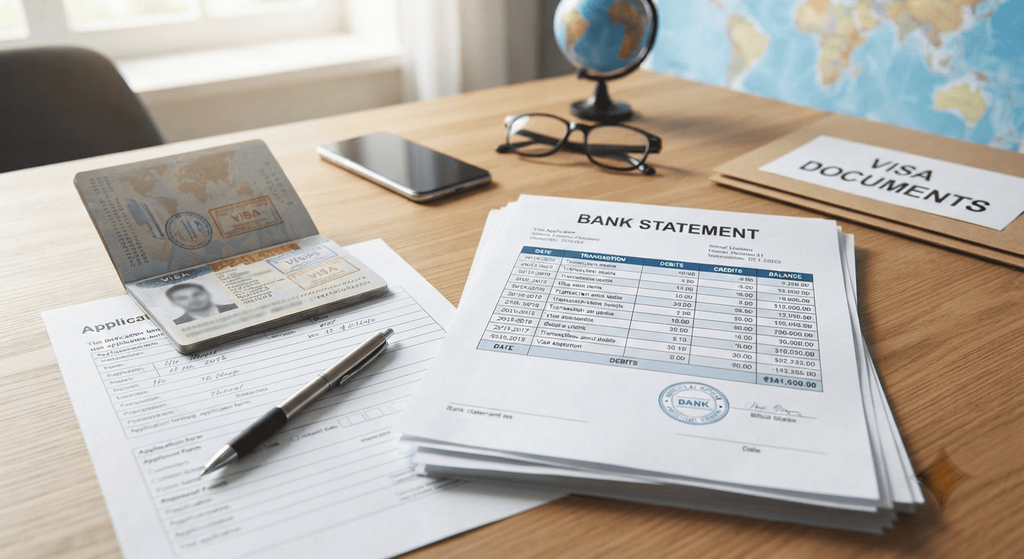
A valid passport is not enough to apply for a Visa. You also need a completed visa application. In many visa applications for visit visas, bank statements and financial documentation are important because they allow visa officers to determine whether or not the applicant can afford a trip and their financial circumstances.
The mere presence of money in your bank does not ensure visa approval. Visa officers can look at your income and account activity. They may also consider regular transactions, the source of funds and your overall financial condition. It may raise concerns about your financial credibility if you have unusual transactions on your bank account or if the information provided in your application does not match.
Most applicants make simple mistakes when preparing the bank statement. Unexpectedly large deposits, unjustified transfers, insufficient funding, or inconsistent earnings can undermine a good application.
It is good to know that you can avoid most of these issues with the right preparation. We explain in this guide the most common bank statement errors that can result in visa refusals. We also explain why they are so important and how professional visa help can assist you with preparing your financial documents.
Why Is a Bank Statement Important for a Visa Application?
Your bank statement is proof of your financial situation. This helps the visa officer to determine whether you will be able to afford your planned trip.
According to the destination and the visa category, an officer may:
- Your available balance
- Regular income
- Monthly expenses
- Account activity
- Source of funds
- Length of financial history
- Travel expenses
- Employment or business income
Your bank statement will therefore need to support the information you provide in your visa request. Inconsistency can raise suspicions if you state in your visa application that you have a steady monthly income. However, your bank statement shows no income.
What Bank Statement Mistakes Can Cause Visa Refusal?
1. Showing an Insufficient Bank Balance
A common problem is not having enough money to pay for a trip.
Visa officers may ask about your finances if you have a low account balance that does not cover the costs of your trip, including flights, accommodations, food, transport, and other expenses.
A visa is not guaranteed by a universal bank account. The requirements for financial support vary depending on the country, visa category and duration of travel.
Preparing financial documents to demonstrate realistically that you can pay for your trip is the best way to avoid this. Focus on your total financial situation, not just the final balance.
2. Making a Large Deposit Just Before Applying
An unexpectedly large deposit made just before submitting your visa application could raise some questions.
The visa officer might ask you where your money came from if, for example, you normally have a modest account balance but deposit a large number of dollars without any explanation.
This does not mean that all large deposits are automatically problematic. The origin of the money can be proven and justified with evidence.
How to avoid this: Maintain accurate records of funds that are legitimate and provide evidence when significant deposits have a genuine origin.
3. Unexplained Cash Deposits
If you have large or frequent cash deposits, it can be hard to understand your financial situation. This is especially true if the amount does not match up with your declared income.
A visa officer will question if the funds you deposit are yours or if they were only deposited in order to boost your application.
Keep documentation of the origins and transparency of your deposits.
4. Providing a Very Short Bank History
If you only submit a small amount of your banking history, it may be hard to show that you have a normal level of financial activity.
Visa applications may ask for statements that cover a certain period. Even when no specific period is required, a consistent and longer financial history can give a more accurate picture of your finances.
Avoid this: Be sure to follow the country’s official documentation requirements. Provide the period of bank statement requested in the correct format.
5. Inconsistent Income and Bank Transactions
It is important to have a bank statement that makes sense in conjunction with your employment or business documentation.
The visa officer might question your information, for instance, if you state that you are paid a salary regularly, but your bank statement shows a different income.
In the same way, business owners should make sure that their financial records are in line with what they claim.
How to avoid: Check your bank statement, your salary slip, your tax documents and your employment letter together before you submit your application.
6. Unexplained Transfers From Other Accounts
You may be asked about large transfers made from business or personal accounts to friends, relatives, and family members.
It may be unclear if, for example, you received a large amount of money just before applying and did not have any evidence to support it.
How to avoid this: If the transfer is real and pertinent, save the supporting documents that describe the source of the money and its purpose.
7. Borrowing Money to Show a Higher Balance
Some applicants will borrow money temporarily to improve their bank balance.
It can cause problems, as the balance may not accurately reflect the applicant’s financial circumstances.
What to do: Provide a genuine financial statement that reflects your current income and your available funds.
8. Bank Statement Does Not Match the Applicant’s Profile
The bank statement you receive should match your financial circumstances.
An applicant who declares an income but then shows a sudden increase in financial activity, without any explanation, may be asked additional questions.
Visa officers look at the whole application rather than just one document.
How to avoid this: Make sure all your documents, including employment, travel, and financial information, are consistent.
9. Submitting Altered or Fake Bank Statements
One of the worst mistakes that an applicant can commit is using fake, edited or altered financial documentation.
False information can lead to visa refusals and serious problems in future visa applications.
Avoid it: Only submit original bank statements that are issued by your bank. Never change dates, balances or any other financial information.
10. Ignoring the Required Bank Statement Format
Different countries may have different requirements regarding financial documents. Some countries require bank statements from specific dates, stamps of the bank, signatures or other types of verification.
The submission of an incomplete or unofficial document can lead to unnecessary problems.
Avoid it by checking the latest requirements at your destination. Obtain your bank statement as requested.
11. Not Explaining Your Source of Income
The balance of your bank account alone may not be sufficient to explain the source of your money.
If you’re employed, your wage and employment documents will support your financial standing. If you’re self-employed, or have a business of your own, you might need to show additional evidence.
You can avoid this by preparing supporting documents like employment letters, wage slips, business records, tax records and other relevant evidence.
12. Ignoring Regular Expenses and Financial Commitments
Your overall financial circumstances may be taken into consideration by visa officers, and not just how much money you have in your bank account.
You may face questions if you have a modest income but list an expensive trip on your application without explaining the means of financing it.
How to avoid this: Set a realistic travel expense budget, and check that your financial records are sufficient to cover your plans.
How Much Bank Balance Is Required for a Visit Visa?
There is no single bank balance requirement for every visit visa.
The amount you may need depends on factors such as:
- Destination country
- Length of stay
- Accommodation arrangements
- Travel expenses
- Number of travelers
- Sponsorship arrangements
- Your income and financial circumstances
Therefore, applicants should not simply deposit a specific amount into their account because someone claims it is the “required balance.”
Instead, you should demonstrate genuine and sufficient financial capacity based on your actual circumstances and the requirements of your destination.
Is a High Bank Balance Enough to Get a Visa?
No.
The mere presence of a large bank account does not automatically guarantee visa approval.
Visa officers will consider all aspects of your application, such as the purpose of your trip, your employment history, finances, accommodations, travel plans and any ties you have to your home nation.
If the applicant’s travel purpose or supporting documents are unclear, they may face questions even if they have substantial savings.
The application should be complete and credible, rather than just focusing on the balance.
How Can You Make Your Bank Statement Stronger for a Visa Application?
A strong financial application should be genuine, consistent, and supported by relevant evidence.
Before submitting your application:
- Keep your financial records organized.
- Provide the required bank statement period.
- Explain significant deposits when necessary.
- Include evidence of regular income.
- Match your financial documents with your employment or business information.
- Prepare a realistic travel budget.
- Avoid unexplained financial transactions.
- Never submit altered documents.
Most importantly, do not try to create a financial history solely for your visa application. Your documents should reflect your genuine financial circumstances.
Can a Professional Visa Consultant Review Your Bank Statement?
Yes. Professional visa assistance can be particularly useful when you are unsure whether your financial documents adequately support your application.
An experienced visa consultant can help you:
- Understand financial documentation requirements.
- Review your bank statements.
- Identify unusual or unexplained transactions.
- Check consistency between financial and employment documents.
- Prepare a document checklist.
- Explain what additional evidence may be relevant.
However, a consultant should never advise you to manipulate your bank statement or create artificial transactions. Professional visa assistance should always focus on genuine documentation and accurate information.
Why Should You Avoid Last-Minute Financial Changes?
One of the most common mistakes made by applicants is that they try to improve their finances immediately before submitting an application.
Depositing large amounts of money before you apply may raise more questions than they answer if it is not clear where the money came from.
Preparing your application on the basis of your real financial history is a better option.
If you are in possession of legitimate funds from an investment, a gift or a business deal, it is important to keep the necessary evidence.
What Should You Check Before Submitting Your Visa Application?
Use this simple checklist before submitting your financial documents:
- Is the bank statement genuine?
- Does it cover the required period?
- Does your income match your employment documents?
- Are large deposits explainable?
- Are significant transfers supported by evidence?
- Does your financial situation support your planned trip?
- Are all names and personal details correct?
- Have you followed the destination’s latest requirements?
- Are your financial documents consistent with the rest of your application?
A final document review can help you identify potential problems before submission.
Why Choose Babaaz Travels & Tours for Professional Visa Assistance?
The preparation of financial documents to accompany a visa request can be confusing, particularly if you’re not sure what the embassy requires.
Babaaz Travels & Tours is a professional visa consultancy that provides visa application assistance to travelers. This helps them better understand the visa requirements and how they can prepare their documents. The team will provide personalized advice depending on the travel purpose and destination of each applicant.
Babaaz Travels & Tours provides visa guidance and assistance with documents, as well as embassy appointment and visa filing support.
This agency is more concerned with accurate and genuine information than it is with unrealistic promises. Travel agencies cannot guarantee visa approval. The final decision is always left to the relevant immigration or embassy.
With the help of a professional, applicants will be able to better understand their financial requirements, identify gaps and prepare their applications confidently.
Conclusion
Bank statements are a vital part of visa applications. However, simply showing that you have a big balance is not sufficient. Insufficient funds or sudden, unexplained deposit, inconsistent income, unusual transfer, incomplete statements, or fake documents are all reasons for concern during the visa assessment.
It is best to show that you have the financial means to pay for your trip. Bank statements must also match your travel documents, business plans, employment and other supporting documents.
Professional advice can help identify potential problems with your visa documents before you submit them.
Babaaz Travels & Tours can provide professional visa consulting, document guidance, filing support, and appointment assistance to applicants. The team provides personalized assistance with a focus of accurate documentation to help you prepare and submit your visa application.
Get professional visa assistance when you need it. Prepare your documents early and honestly.