
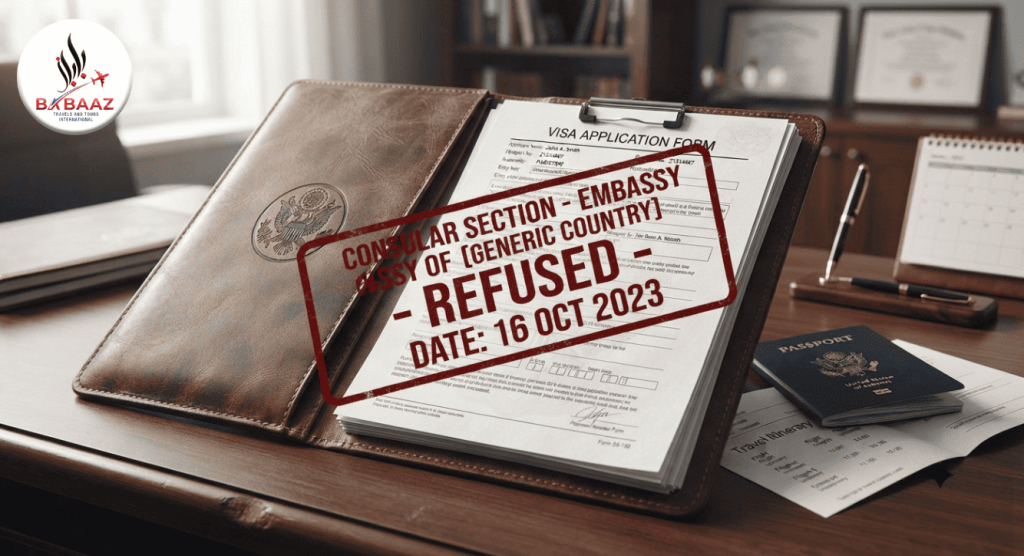
It can be stressful to apply for a visa, even if you have all the documents ready, paid the fee, and organized your trip. A well-prepared visa application may still be rejected if your financial situation is not satisfactory, you do not have the right documentation, or you don’t intend to return home.
Understanding the reasons for visa refusals can help applicants identify possible problems before submitting applications. You can avoid mistakes by preparing carefully and accurately for your visa application and with the help of the best visa consultant, whether it is a visitor, family or tourist visa.
In this guide we will explain the most frequent reasons for visa rejection, what you can do as a result of a visa refusal and how professional assistance with visas can be helpful.
Why Do Visas Get Refused?
Visa applications are usually refused if the reviewing authority does not feel that the applicant meets all the requirements for the visa category. The refusal of your visa application does not necessarily mean that you have completely misrepresented yourself. The information you have provided may not always be enough to prove your financial security, travel intention, or intent to comply with visa conditions.
Among the most common reasons of visa refusal are:
- Insufficient financial evidence
- Incomplete documentation
- Weak travel history
- Unclear travel purpose
- Inconsistent information
- Weak ties to your home country
- Previous visa refusals
- Concerns about overstaying
- Incorrect or misleading information
- Failure to meet specific visa requirements
Let’s look at these reasons in more detail.
1. Insufficient Proof of Funds
The financial situation is an important factor in many visa applications. Visa officers need to assess whether you are able to afford your trip, without being in financial difficulty or having to rely on unofficial employment.
Your application may raise concerns if:
- Your bank balance is too low for the proposed trip.
- Your income does not support your travel budget.
- Your bank statements show unusual transactions.
- Large deposits are not properly explained.
- Your financial documents are incomplete.
- Your stated travel expenses do not match your available funds.
How to Avoid It
You should provide consistent and genuine financial documents. These include bank statements, wage slips, employment documentation, tax records or any other documents relevant to your situation.
Do not deposit an unjustified large amount to boost your bank account before you apply.
2. Incomplete or Incorrect Documents
Documentation that is incomplete, incorrect, or outdated can be a major reason for visa refusal.
Depending on their destination and the type of visa, applicants might need to provide documents like:
- Valid passport
- Bank statements
- Proof of employment
- Salary slips
- Travel itinerary
- Accommodation details
- Travel insurance
- Invitation letter, where applicable
- Proof of relationship
- Supporting financial documents
How to Avoid It
Examine carefully the official requirements for your visa category before you apply. Be sure to use the same names, dates, passport information, employment details, and financial information throughout your application.
3. Unclear Purpose of Travel
Visa officers need to understand your motivation for traveling and to determine if the proposed activities match up with the visa that you are seeking.
An applicant for a tourist’s visa, for example, should present a realistic tourism plan and not information that indicates they intend to remain or work permanently.
How to Avoid It
Clearly explain:
- Why you are traveling
- Where you plan to stay
- How long you intend to stay
- What you plan to do
- Who will finance the trip
- Why you will return after the visit
Your itinerary should be realistic and consistent with your supporting documents.
4. Weak Travel History
A visa refusal does not necessarily result from a limited travel record. Previous international travel can be considered in the application depending on the circumstances of the applicant and the country.
If you can demonstrate that your immigration history is in compliance with the rules, it will be easier to prove.
How to Avoid It
If you are a new traveler, provide evidence that your trip is genuine. This includes your financial situation, your employment or business, and your ties to home.
Don’t create a fake travel history, or submit false documentation.
Do not create fake travel history or submit false documents.
5. Weak Ties to Your Home Country
For many temporary visitor visas, applicants must demonstrate that they have sufficient reasons to return home after their trip.
A visa officer may consider factors such as:
- Employment
- Business ownership
- Family responsibilities
- Education
- Property or financial commitments
- Other legitimate personal or professional obligations
How to Avoid It
Provide genuine evidence that supports your circumstances. For an employed applicant, this could include employment verification, approved leave, and salary information where relevant.
6. Inconsistent Information
Inconsistencies can create doubts about the credibility of an application.
For example, your application may become problematic if:
- Your bank statement shows one income but your application states another.
- Your itinerary does not match your hotel booking.
- Your employment information differs between documents.
- Your stated travel dates conflict with your flight reservation.
- Information differs from a previous application without explanation.
How to Avoid It
Review your entire application before submission. Every document should tell the same overall story.
7. Previous Visa Refusal or Immigration Problems
The refusal of your previous application does not mean that you will also be denied for the next one. It is important that applicants accurately disclose all previous visa refusals.
Other visa-related issues, such as past overstays, immigration infractions or visa problems, may also affect future applications.
How to Avoid It
Never hide a previous refusal when disclosure is required. Instead, understand the reason for the previous decision and address the relevant issue in your new application.
8. Concerns About Overstaying
If the visa is temporary, the authority reviewing the application may examine whether or not the applicant is likely to adhere to the conditions of the visa.
If the overall application is not convincing, it can raise concerns if the applicant does intend to leave the country at the end or the authorized stay.
How to Avoid It
Provide accurate information about your employment, family, financial circumstances, travel plans, and intended length of stay.
Never provide false information simply to make your application appear stronger.
9. False or Misleading Information
Providing false information or fraudulent documents can have serious consequences and may result in refusal, additional scrutiny, or other immigration consequences depending on the country.
Examples include:
- Fake bank statements
- Fake employment letters
- Fake hotel reservations
- Altered documents
- Misrepresenting previous travel
- Hiding relevant immigration history
How to Avoid It
Always submit genuine documents and truthful information. If you are unsure how to present a complicated situation, seek professional guidance rather than changing or hiding information.
10. Applying for the Wrong Visa Category
Another potential problem is selecting a visa category that does not match your actual purpose of travel.
For example, tourism, business visits, study, employment, and family-related travel can have different requirements.
How to Avoid It
Determine the correct visa category before preparing your application. Your stated purpose, documents, itinerary, and activities should correspond to that category.
How to Reduce the Risk of Visa Refusal
There is no legitimate way to guarantee visa approval, but you can reduce avoidable errors by following a structured process.
Before submitting your application:
- Check the current requirements for your destination.
- Select the correct visa category.
- Prepare complete and genuine documents.
- Review your financial evidence.
- Create a realistic travel itinerary.
- Check that all personal information is consistent.
- Explain unusual financial transactions where appropriate.
- Disclose relevant previous visa or immigration history.
- Review the application carefully before submission.
- Prepare honestly for any required interview.
Can a Travel Agency Help Prevent Visa Refusal?
Professional travel agencies and visa consultants are able to help travelers understand the requirements for travel documents, organize supporting documentation, check applications for common mistakes, and prepare travel-related paperwork.
Travel agencies cannot guarantee visa approval because the final decision rests with the relevant embassy.
If you are uncertain about your documentation or the visa application process, professional assistance can help organize the process and prevent mistakes.
What Should You Do After a Visa Refusal?
If your visa has been refused, don’t immediately submit the same application again.
First:
- Read the refusal letter carefully.
- Identify the specific concerns mentioned.
- Review your previous application.
- Determine whether your circumstances or supporting evidence have changed.
- Check whether an appeal, administrative review, or reapplication is available for that particular visa.
- Correct genuine weaknesses before submitting another application.
The appropriate next step depends on the country, visa category, and reason for refusal.
Final Thoughts
Understanding the reasons visas are refused is essential for preparing an effective visa application. Incomplete documents can cause issues. So can insufficient financial proof, unclear travel purpose, inconsistent information, poor supporting evidence and concerns regarding visa compliance.
Your best bet is to provide a complete, accurate, consistent and well-supported travel application, which clearly explains the purpose of your trip and your circumstances.
Babaaz Travels and tour will assist you in preparing your visa application, obtaining the necessary documentation and providing travel services.